 Boca-BoardBeta
01 / ABOUT
SUNDAY NEEDED A SCOREBOARD.
Back in 2014 we built our first prototype with a Raspberry Pi and an old monitor in the garage.
Not Boca-Board exactly. Not yet.
But most of the idea was already there.
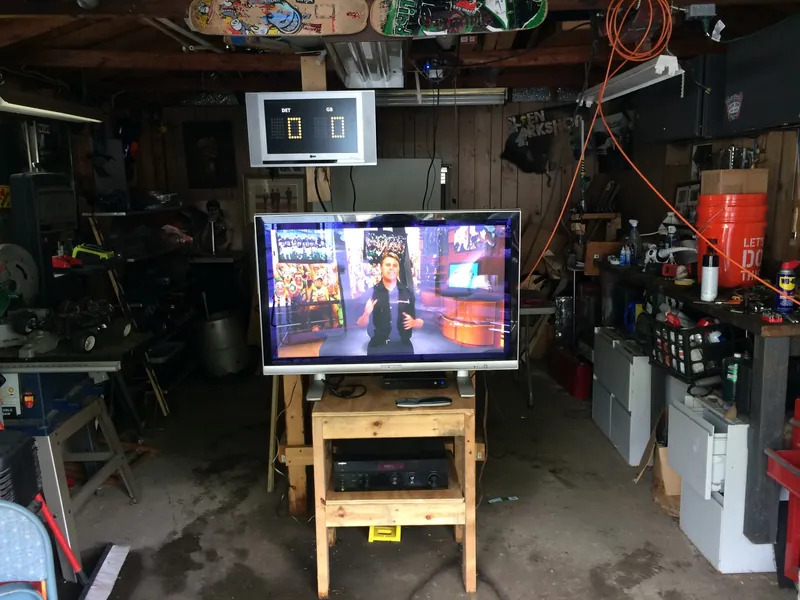
AUGUST 2014 / THE IDEA
A SIX-FOOT SCOREBOARD SEEMED REASONABLE.
The first version was supposed to be a six-foot-wide fantasy football scoreboard.
The plan was a wooden board with three physical monitors: home and away scores on either side, with a larger screen in the middle for the game clock, possession, and celebrations.
A Raspberry Pi would run the whole thing.
The scoreboard would follow real NFL games as they happened and update itself automatically.
“I'm aiming to have the app running on a Raspberry Pi connected to an old monitor. Like a simple dashboard for scores.”
SEPTEMBER 2014 / THE FIRST WORKING VERSION
IT WAS LIVE.
By September, the software was following NFL games in real time.
It could update the score, read the description of the latest play, and recognize things like touchdowns, sacks, and interceptions.
That meant the scoreboard didn't just know the score.
It knew when something happened.
And because a scoreboard ought to celebrate a touchdown, the next experiment involved Tecmo.
AND THEN THERE WAS TECMO.
The question was simple: if the scoreboard knew somebody had just scored, what should it do about it?
On August 30, 2014, we went looking for the touchdown, interception, injury, and celebration scenes from Tecmo Super Bowl.
The TecmoBowl.org community had a name for them:
Cutscenes.
Soon the live scoreboard could recognize a scoring play and switch over to a celebration.
The idea that Boca-Board could do more than report the game — that it could react to it — started there.
“I've got the app live updating scores, and am able to parse out the description of the last play to know if there's been a score, sack, interception, etc.”
The six-foot wooden scoreboard was still waiting to be built.
The software wasn't.
SEPTEMBER 21, 2014 / THE GARAGE
TURNS OUT, A SCOREBOARD IS PRETTY USEFUL.
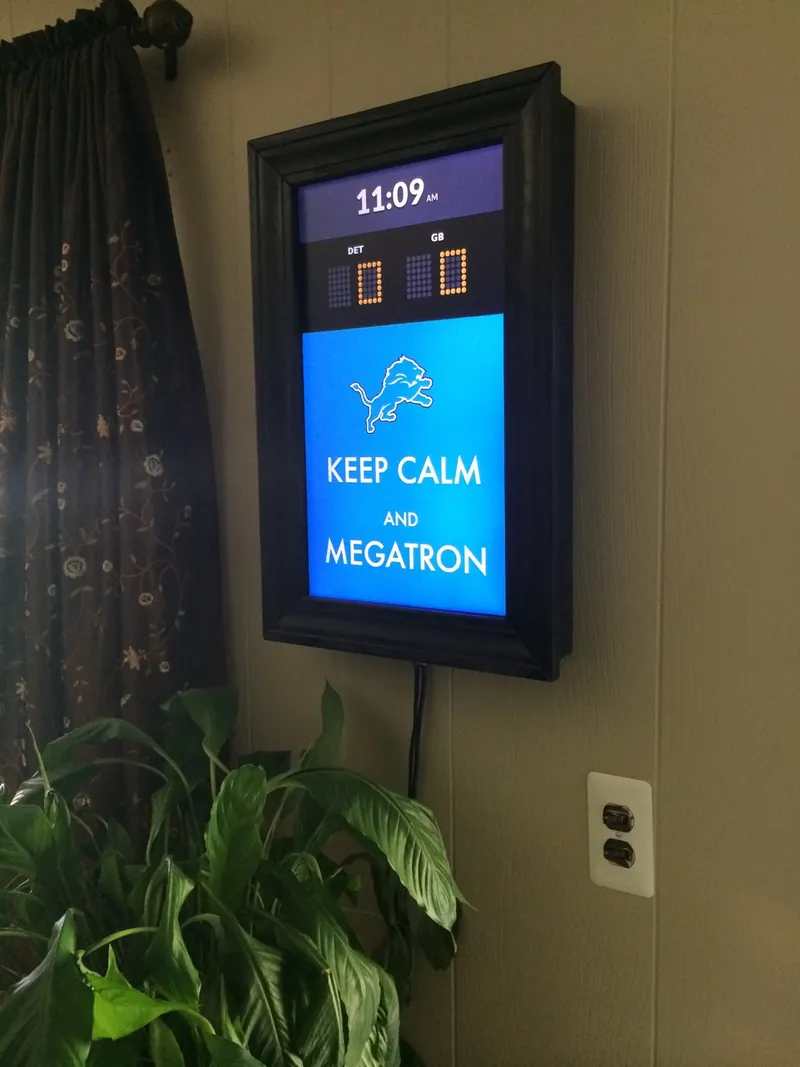
A couple weeks later, the experiment moved into the room.
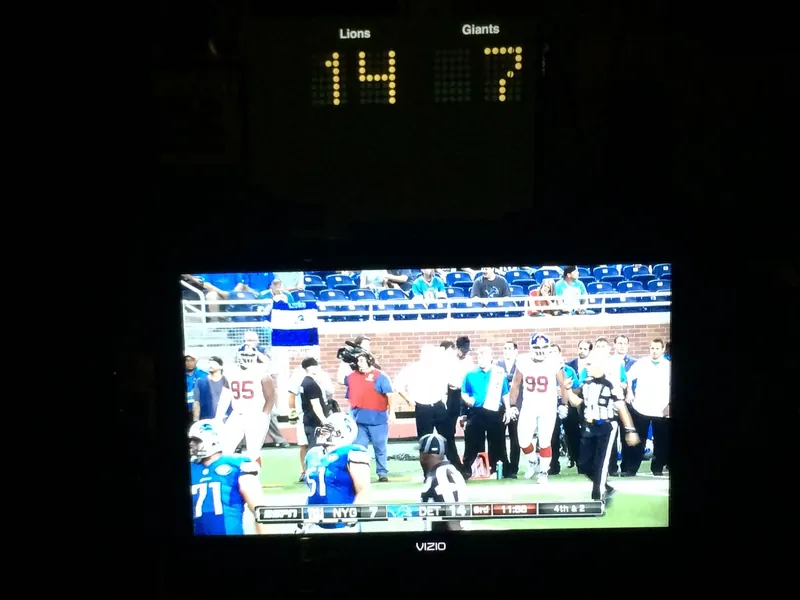
On September 21, 2014, we tried the scoreboard a few different ways during an actual day of football.
One version lived inside the family dashboard.
Another gave the scoreboard its own screen beside the game.
And that's when the simplest version of the idea became the interesting one:
Keep the game on the TV. Put the scores somewhere you can always see them.
No digging through an app. No stopping what you're watching. Just look over.
There's the score.
THEN WE DIDN'T BUILD IT FOR TWELVE YEARS.
The six-foot wooden scoreboard never happened.
Boca-Board didn't either.
But every football season, we wanted that scoreboard back.
“Any update on this? The project sounds nifty.”
Eventually.
SEPTEMBER 21, 2026
TWELVE YEARS LATER.
On September 21, 2026 — exactly twelve years after those original photos were taken — Boca-Board is finally here.
A lot changed.
The Raspberry Pi and three-monitor wooden scoreboard are gone. The technology is different. The scoreboard looks considerably better.
But the idea really hasn't changed much.
Keep the game on the TV. Put the scoreboard on another screen.
Today, your phone is the remote.
Show every game at once, or give one matchup the whole board.
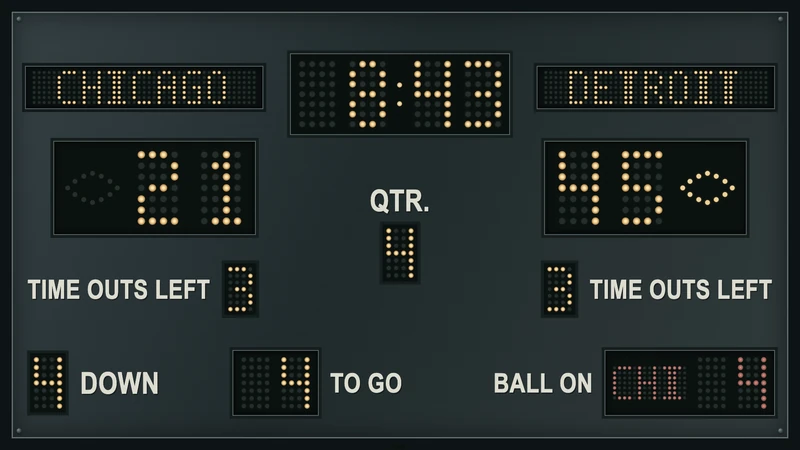
THE IDEA IS STILL PRETTY SIMPLE.
Scores are everywhere now.
But checking them usually means finding your phone, opening an app, finding the game, and looking at another little screen.
A scoreboard works differently.
It's already there when you look up.
Turns out, that's pretty useful.
MADE BY BOCA LABS.
Boca-Board is an independent Boca Labs project, made in Arizona for people who like making a day of football.
Open the scoreboard ↗